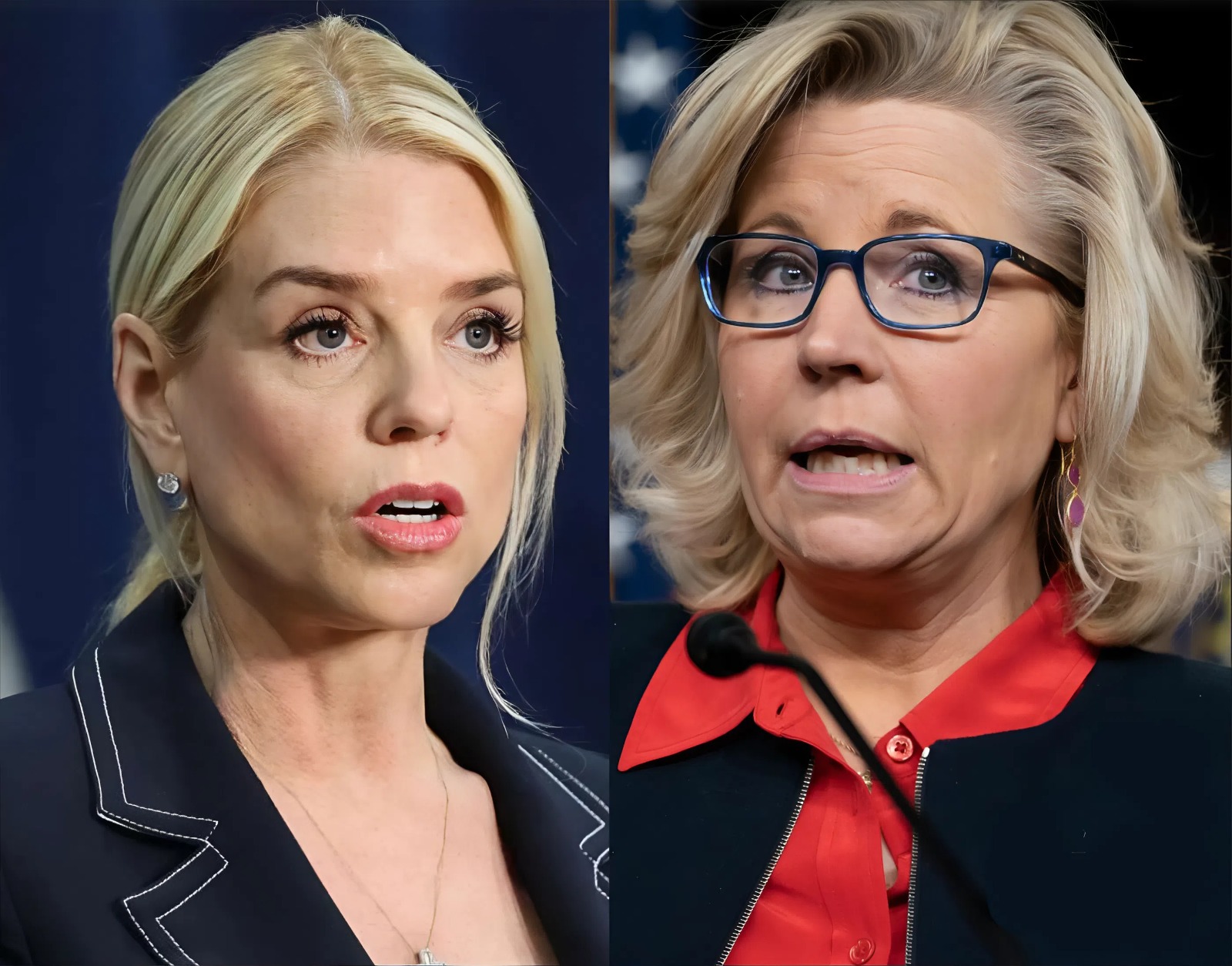
Pam Bondi believes the Department of Justice has enough evidence against the traitor Liz Cheney to bring her before a grand jury.
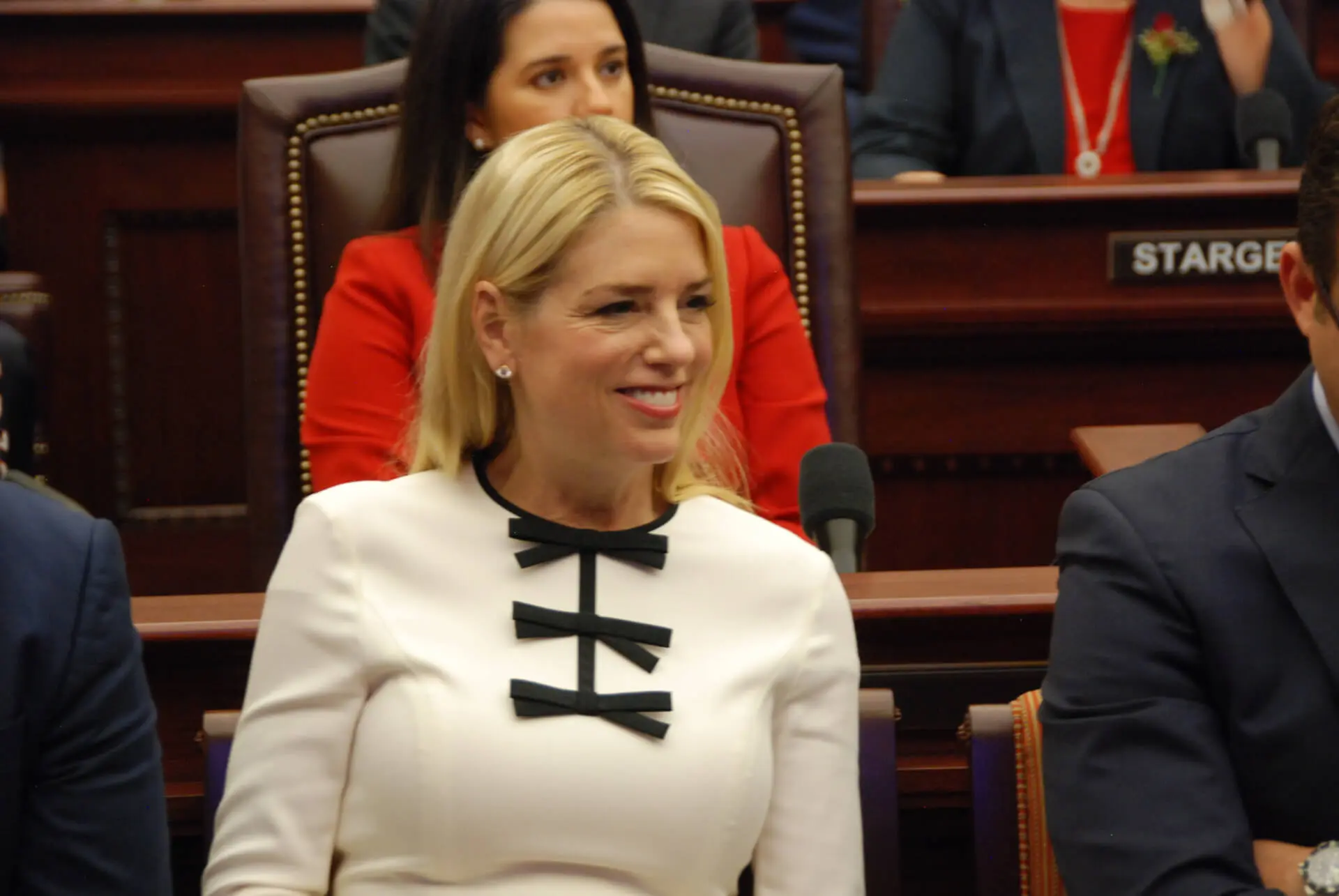
“She lied to voters, fabricated evidence for the Unselect Committee, and threatened witnesses with prison time if they didn’t tell the story she had written for that day.” Bondi said Cheney’s involvement was extensive, with numerous calls between her and Pelosi on that very morning.
“There is a theory that she orchestrated the entire event with Pelosi, and we are going to prove it.” Immediately afterward, a thick 30-page dossier was presented, leaving the Council restless and on edge.
In a bombshell revelation that has electrified conservative circles, Attorney General Pam Bondi declared on Wednesday that the Department of Justice possesses irrefutable evidence to indict former Representative Liz Cheney. The announcement came during a high-stakes briefing to a select council of Republican leaders in Washington, D.C.
Bondi, a staunch Trump loyalist confirmed as AG earlier this year, wasted no time in labeling Cheney a “traitor” whose actions undermined American democracy. Her words echoed the long-simmering grievances over the January 6, 2021, Capitol events, framing Cheney as the architect of a politicized witch hunt.
Bondi detailed Cheney’s alleged crimes with surgical precision, accusing her of deceiving voters during her tenure on the House Select Committee investigating the Capitol riot.
“She lied to voters, fabricated evidence for the Unselect Committee, and threatened witnesses with prison time if they didn’t tell the story she had written for that day,” Bondi stated firmly.
These claims stem from a GOP-led subcommittee’s 2024 report, which unearthed communications suggesting Cheney pressured key witnesses like Cassidy Hutchinson to alter testimonies.
The former Wyoming congresswoman’s role as vice chair of the bipartisan panel has long been a flashpoint for Trump allies. Bondi highlighted “numerous calls between her and Pelosi on that very morning,” referring to frantic exchanges allegedly made hours before the Capitol breach.
These logs, obtained through subpoenas, paint a picture of coordination that Bondi described as “conspiratorial.” Critics of the January 6 probe have long suspected insider orchestration to amplify narratives against then-President Trump.
“There is a theory that she orchestrated the entire event with Pelosi, and we are going to prove it,” Bondi asserted, her voice steady amid the room’s tension. This bold hypothesis revives conspiracy theories that the riot was a setup to derail Trump’s agenda.
Bondi vowed to deploy the full weight of the DOJ’s resources, including the newly formed Weaponization Working Group led by Ed Martin, to substantiate these allegations. The group, established post-Trump’s 2024 victory, targets perceived abuses by the “deep state.”
Immediately afterward, a thick 30-page dossier was presented, leaving the Council restless and on edge. The document, bound in stark black leather, contained redacted transcripts, timelines, and forensic analyses of digital footprints. Council members shifted uncomfortably as pages flipped to reveal encrypted messages and call records timestamped January 6.
Whispers rippled through the chamber—some nodded in approval, others exchanged wary glances at the legal ramifications.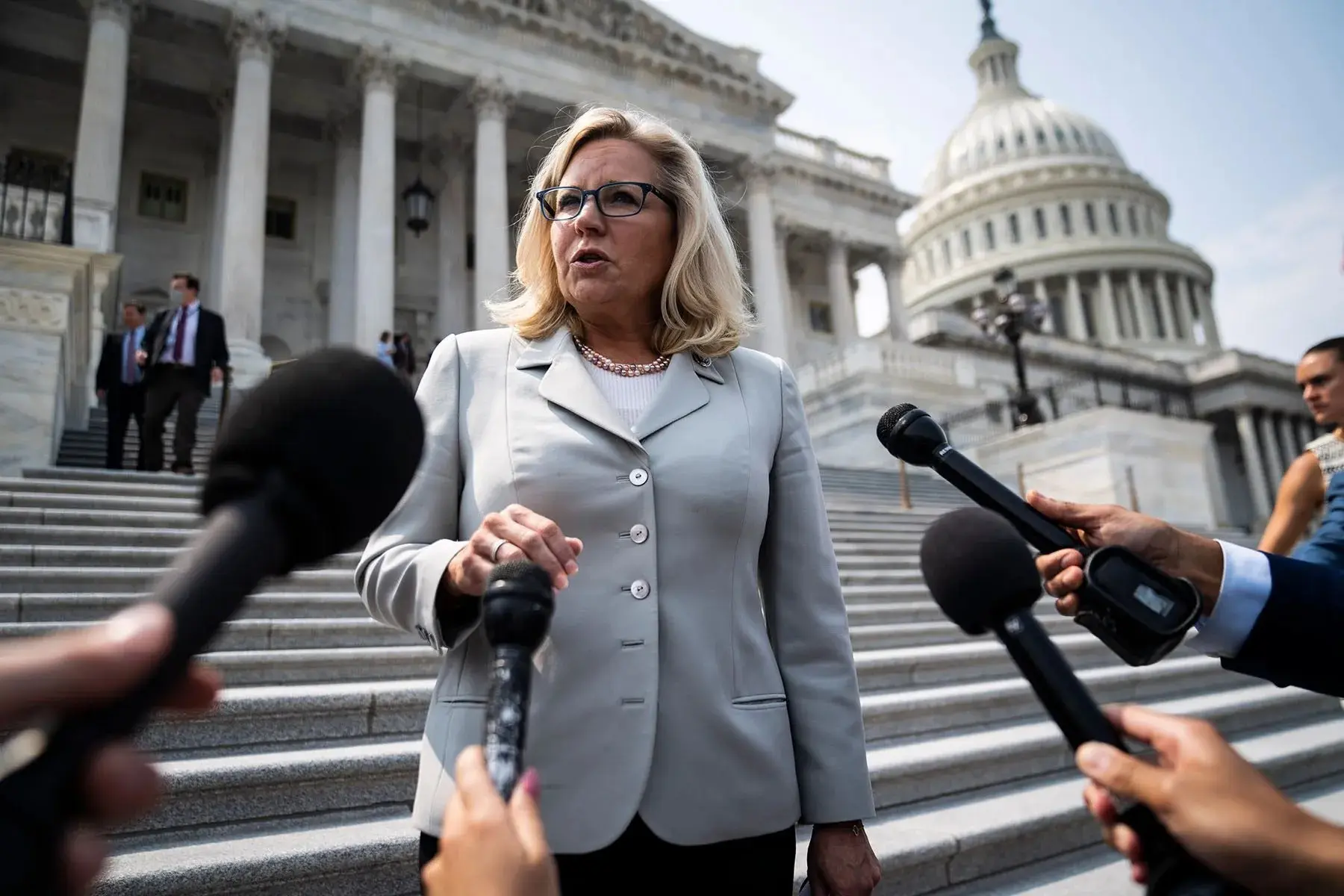
Pam Bondi, 59, rose to prominence as Florida’s attorney general from 2011 to 2019, where she championed conservative causes like anti-trafficking laws. Her nomination by President Trump in November 2024 faced fierce Democratic scrutiny during confirmation hearings, particularly over potential retribution probes.
Yet, with a slim Republican Senate majority, she was confirmed in January 2025, promising to “restore justice” after years of what she called politicized prosecutions.
Liz Cheney, once a rising star in the GOP, became persona non grata after breaking ranks to criticize Trump’s election fraud claims. Her outspoken role on the January 6 committee, culminating in explosive hearings featuring Hutchinson’s testimony about Trump’s alleged temper tantrum, sealed her exile from the party.
Cheney lost her 2022 primary to a Trump-endorsed challenger and has since authored a memoir lambasting the former president as a threat to democracy.
The dossier’s unveiling marks a pivotal escalation in Trump’s promised “drain the swamp” agenda. Sources close to the DOJ indicate it compiles evidence from multiple probes, including the House Administration Subcommittee’s interim report released in December 2024.
That document accused Cheney of witness tampering by secretly contacting Hutchinson via backchannels, bypassing her original attorney to secure “friendly” counsel aligned with the committee.
Bondi’s briefing drew immediate backlash from Democrats, who decried it as “vindictive theater.” House Minority Leader Hakeem Jeffries tweeted that the move reeks of authoritarianism, vowing congressional oversight if indictments proceed.
Legal experts, however, caution that grand jury proceedings remain secretive, and Cheney’s team has dismissed the claims as “fabricated smears” designed to shield Trump from accountability.
Cheney’s alleged threats to witnesses form a core pillar of the case. The dossier cites affidavits from unnamed sources claiming she warned of “severe consequences” for non-cooperation, including contempt charges or career ruin.
One exhibit details a scripted narrative for Hutchinson’s public testimony, purportedly drafted by Cheney to maximize political damage against Trump allies like Mark Meadows.
The Pelosi-Cheney call logs add intrigue, showing over a dozen exchanges between 8 a.m. and noon on January 6. Bondi theorizes these discussions bypassed standard protocols, potentially coordinating security lapses at the Capitol.
While Pelosi’s office has denied any orchestration, the timing aligns suspiciously with the riot’s escalation, fueling speculation of a staged provocation.
Ed Martin, overseeing the Weaponization Group, corroborated Bondi’s assertions during the briefing. The former Missouri prosecutor, who handles pardon reviews, emphasized the dossier’s “mountain of circumstantial evidence.” He warned that similar scrutiny awaits other committee members, including Adam Schiff and Bennie Thompson, for alleged evidence suppression.
Trump himself amplified the news on Truth Social, posting, “Finally, justice for the J6 hoax! Liz Cheney and her cronies will face the music.” His endorsement signals full backing, potentially influencing FBI Director Kash Patel to prioritize the probe. Patel, a Trump confidant with a history of Jan.
6 skepticism, has pledged impartiality but faces ethics complaints over perceived biases.
Public reaction split sharply along partisan lines. Conservative outlets like Fox News hailed Bondi as a “fearless warrior,” while MSNBC panels labeled the dossier a “revenge fantasy.” Polls from Rasmussen Reports show 62% of Republicans support investigating Cheney, versus 18% of Democrats, highlighting deepening national divides.
Cheney’s response was swift and defiant.
In a statement from her Wyoming ranch, she called Bondi’s claims “a desperate bid to rewrite history and protect a would-be dictator.” She teased forthcoming legal countermeasures, including defamation suits against the DOJ, and urged allies to rally against what she termed “Trump’s gestapo tactics.”
As the grand jury looms, procedural hurdles abound. Federal rules require probable cause for indictment, and Cheney’s high profile demands airtight evidence to withstand appeals. Bondi, aware of the stakes, has assembled a team of veteran prosecutors to navigate the labyrinth of discovery and hearings.
The broader implications ripple through Washington. If Cheney faces charges—potentially for obstruction, perjury inducement, or conspiracy—it could deter future congressional probes into executive overreach. Conversely, acquittal might embolden critics, portraying the DOJ as a partisan weapon under Bondi.
International observers watch warily, with outlets like The Guardian decrying the saga as American democracy’s erosion. European allies, already strained by Trump’s tariff threats, fear U.S. instability spilling into global affairs.
Bondi’s dossier doesn’t stop at Cheney. Appendices outline parallel investigations into media leaks and tech censorship tied to January 6 narratives. This holistic approach aims to dismantle what conservatives call a “cabal” of anti-Trump forces entrenched in government.
For Cheney, the personal toll mounts. Once eyed for higher office, she now navigates a landscape of isolation, her family—daughter of former VP Dick Cheney—bearing the brunt of online vitriol. Yet, her resolve remains, as evidenced by recent book tour appearances decrying authoritarianism.
The council’s unease post-briefing underscores the high-wire act. Some members, eyeing midterms, worry about voter backlash if the probe fizzles. Others see it as electoral gold, rallying the base against “RINO betrayal.”
Bondi concluded the session with a rallying cry: “Truth isn’t partisan; it’s justice delayed too long.” As aides distributed dossier copies, the room buzzed with anticipation—and dread—of the battles ahead.
In this charged atmosphere, December 2025 feels like a turning point. Will Cheney’s legacy crumble under scrutiny, or will she emerge as a martyr for accountability? Only the grand jury’s verdict will tell.
The saga captivates beyond Beltway confines, with late-night hosts like Stephen Colbert mocking Bondi’s “conspiracy couture.” Yet, for millions, it’s no jest—it’s a reckoning for a divided nation’s soul.
As probes intensify, whispers of preemptive pardons swirl. Biden’s lame-duck administration could shield Cheney, but political calculus complicates such moves. Trump, ever the strategist, hints at reciprocity for his supporters.
Ultimately, Bondi’s gambit tests the republic’s resilience. In an era of eroded trust, pursuing “traitors” risks further fracture—or cathartic closure. The dossier’s pages hold the key, but their story is far from over.