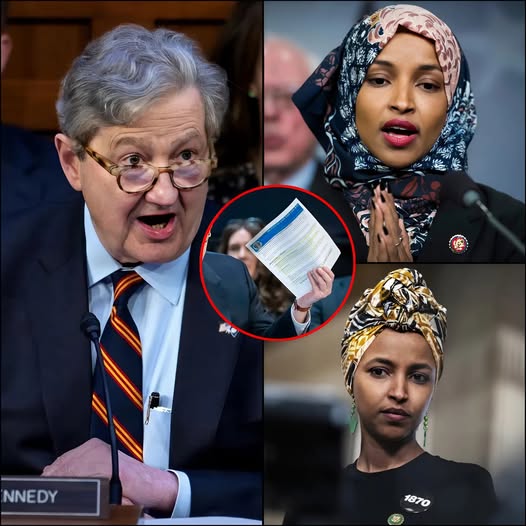
When Senator John Neely Kennedy confronted Representative Ilhan Omar during a tense congressional session, most observers believed the exchange would remain confined to rhetorical boundary-pushing, the kind that punctuates Washington’s daily disputes.
The moment he uttered the now widely circulated line—“If you don’t like America, then… leave”—the chamber reacted with a brief shock that still fell within the normal rhythms of political theater.
But the real destabilizing force of the hearing arrived not with his words, but with the object he raised immediately afterward: a sealed black file, thick enough to suggest seriousness yet slim enough to be unsettlingly selective.
It was the document that would dominate the national conversation long after the heated remark faded.
The file, according to Kennedy, contained notes that “no one here wants to see.” It was a phrase that seemed calculated, not for spectacle, but for quiet impact. Up until that moment, the hearing had followed a predictable trajectory of partisan sparring.
Omar had been speaking about concerns regarding foreign policy decisions, specifically pointing to issues she believed reflected systemic disregard for marginalized communities.
The discussion, though pointed, remained within the framework of policy disagreement. Kennedy’s interjection shifted the environment abruptly. The sudden gesture toward the sealed file forced a new layer of tension into the room—one that did not rely on accusations alone, but on the implication of latent evidence.

At first, few were certain what Kennedy intended to convey. Onlookers described an atmosphere that changed in seconds: a sudden stiffness in posture across both sides of the aisle, advisers whispering urgently behind committee chairs, and a dozen smartphone screens lighting up as staffers exchanged rapid messages.
Some interpreted Kennedy’s gesture as political theater, but the reaction from several senior members—especially those who rarely flinched—told a different story. Their expressions suggested that the senator had touched a nerve tied to long-standing debates about transparency, internal communications, and the limits of acceptable critique within American institutions.
Kennedy did not open the file. He merely held it aloft for several seconds, turning it slightly so that the entire front row could see the red mark on its upper corner.
Those who were familiar with committee documentation quickly recognized the mark as one typically used by internal review officers to denote “non-circulated” material. Files with that designation are often accessible only to a handful of officials and are rarely referenced publicly.
The fact that Kennedy had one raised immediate questions: How had he acquired it? Why bring it to this particular hearing? And why did it appear to implicate members of Congress in something related to “anti-American statements,” as he phrased it?
The senator’s comment that the file was “directly related to anti-American statements by some members of Congress” was vague enough to allow for multiple interpretations, yet specific enough to unsettle those seated before him. It did not accuse Omar of wrongdoing outright, nor did it specify names.
Instead, it pointed to a broader pattern Kennedy believed required scrutiny. His suggestion implied that certain remarks, speeches, or private correspondences—whether misunderstood, misrepresented, or accurately recorded—had raised internal concerns about ideological alignment within Congress itself.
As the hearing proceeded, the file became the central focus despite Kennedy’s refusal to elaborate. Omar, notably composed after the initial confrontation, questioned the senator directly. She asked whether he intended to accuse her of disloyalty or whether the file was merely a prop designed to stoke outrage.
Kennedy responded only by stating that the contents “speak for themselves,” adding that he had “no obligation to reveal classified notes in an open hearing.” His response revealed little, yet it placed attention squarely on the distinction between public rhetoric and internal investigation—a distinction Washington rarely enjoys having exposed.
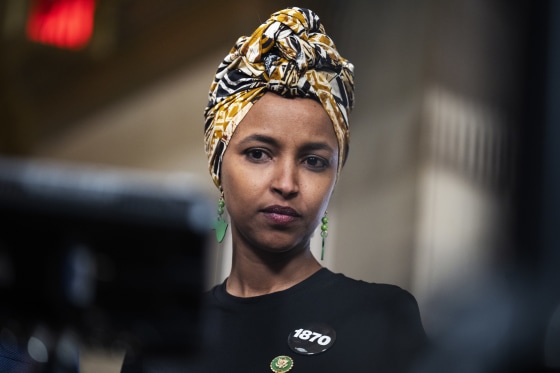
The nature of the file quickly became the subject of speculation among journalists and policy analysts. Some argued that it could contain nothing more than compiled public statements presented as though they were sensitive.
Others believed the file might include internal assessments conducted after controversial speeches made by several members of Congress in previous years. Intelligence committees have often performed such assessments, not necessarily as punitive measures but as part of standard protocol evaluating whether statements could be weaponized by foreign entities.
The possibility that Kennedy had gained access to early drafts of those assessments—documents that typically remain buried under layers of classification—raised uncomfortable questions.
Analysts noted that if the file contained raw transcripts or notes from internal reviews, revealing even a hint of their existence could inflame tensions between agencies and lawmakers.
The reaction from the room seemed to confirm that individuals present were aware, in general terms, of the category of material the file might belong to.
Several senators exchanged glances that suggested familiarity with at least portions of the subject matter. Their concern seemed less about the public repercussions of Kennedy’s remark and more about the potential legal and institutional implications of displaying such a file without authorization.
A few aides immediately left the chamber, likely to consult with legal teams or security officials about what had just occurred. The presence of the file had suddenly shifted the hearing from a debate about public discourse into an inquiry about classified information and its appropriate handling.
The aftermath outside the chamber was equally intense. Commentators debated whether Kennedy had acted responsibly. Supporters argued that he had demonstrated courage by pointing to issues others preferred to ignore. Critics countered that implying the existence of damaging information without providing proof was destabilizing and reckless.
They also questioned whether Kennedy had the authority to hold or reference the file publicly, suggesting that if it contained the type of sensitive information he claimed, displaying it in a hearing might violate internal regulations.
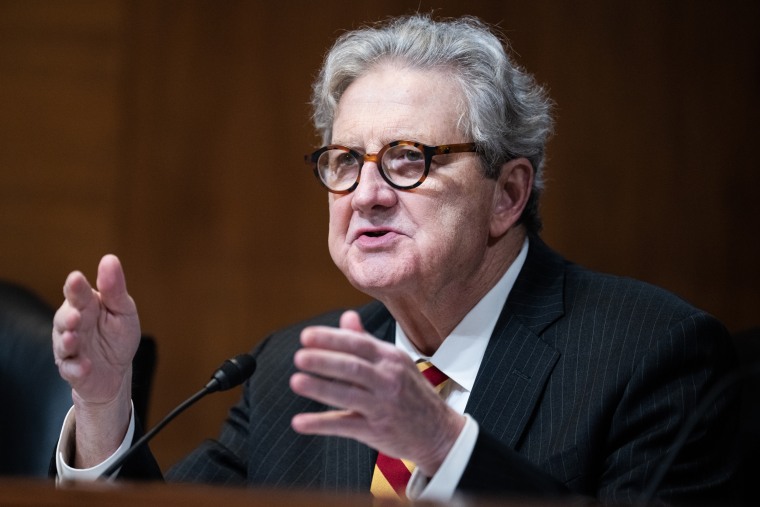
Omar herself issued a statement later that day, stressing the importance of maintaining transparent democratic processes. She emphasized her commitment to the country and denounced the implication that her criticisms of certain policies equated to disloyalty.
Her statement was measured, avoiding personal attacks, but it underscored her concern about the precedent Kennedy had set: a lawmaker publicly insinuating the existence of internal surveillance or monitoring without confirming the details or offering clarifications.
Behind closed doors, according to several aides who later spoke on background, congressional leadership initiated inquiries into whether Kennedy had introduced classified material into a public hearing. This was not about attempting to silence him; rather, it was a procedural necessity.
Whenever a member of Congress references sensitive or restricted material, committees must verify that no internal rules were violated and that no unauthorized disclosures occurred. If Kennedy indeed possessed classified notes, his display of the file—even without opening it—could warrant review by the House and Senate security offices.
While leadership was conducting its internal assessment, Kennedy continued to defend his action.
He stated that the public had a right to know that certain discussions were taking place behind the scenes, discussions that involved what he described as “a troubling pattern of rhetoric that undermines American principles.” He reiterated that he had not disclosed any classified details and that his gesture was merely symbolic—a warning that certain criticisms of the United States could have larger repercussions within the broader framework of national security.
What many found most intriguing, however, was the speech Kennedy did not give. Observers familiar with his communication style noted that he often brings forward supporting documentation when debating contentious issues. Yet during this hearing, he did not quote from the file, nor did he summarize its contents.
He simply allowed its presence to speak for itself. This restraint raised questions about whether the file included material he felt uncomfortable revealing, or whether he believed the suggestion alone would compel internal action without requiring public disclosure.

Analysts speculated that the file might include internal assessments of how foreign media outlets had used certain statements by U.S. lawmakers to fuel anti-American narratives abroad. Such assessments, though not inherently accusatory, can be politically sensitive because they tie domestic speech to international strategic consequences.
If Kennedy possessed such material, it would explain the visible discomfort among several members of the committee. It would also explain why the senator chose not to quote it: such documents are rarely intended for public consumption, and exposing them could create diplomatic complications.
Another possibility revolved around long-standing debates within intelligence agencies about the line between protected political speech and rhetoric that can be exploited by foreign adversaries. Some believe internal disagreements have existed for years about how to classify statements that may be legally permissible but strategically problematic.
If the file touched on these debates, Kennedy’s gesture may have been an attempt to pressure committees to address the issue more publicly.
As news of the incident spread, public reaction followed predictable political divides. Supporters of Kennedy praised him for taking a stand against what they viewed as unproductive criticisms of the country.
Critics argued that he had crossed an ethical line by brandishing an ambiguous file as leverage in a political confrontation. Yet the most significant reaction came not from political commentators but from within the legislative apparatus itself.
Committees responsible for oversight of classified information began requesting information from Kennedy’s office regarding the origins of the file. Security officers needed to confirm whether the file was genuine, how it had been obtained, and whether it contained any restricted material.
In private conversations, some lawmakers expressed frustration that the incident could trigger weeks of procedural reviews, detracting from substantive legislative work. Others felt that the moment exposed vulnerabilities in the way sensitive information circulates within Congress.
If a senator could bring a sealed file into a public hearing without clear explanation, it raised concerns about potential breaches or misuses of classified documentation.
One of the most significant questions remained unanswered: What exactly was inside the file? Kennedy never offered clarity. His staff declined to comment on its contents, citing the need to follow the review process initiated by congressional security officials.
The lack of explanation deepened the mystery, prompting investigative journalists to explore connections between Kennedy’s statement and earlier internal debates regarding foreign disinformation campaigns, ideological polarization, and national security.
Some reporters traced the origins of Kennedy’s frustration to previous committee sessions in which he had expressed concern about lawmakers’ rhetoric being amplified by foreign state-aligned media. He argued that such amplification, whether intentional or not, could create vulnerabilities in public trust.
If the file contained analyses or transcripts related to those concerns, it would align with Kennedy’s broader strategic perspective.
In the weeks following the incident, leaks—though unverified—began circulating suggesting that the file contained references to statements made not only by Omar but by several members across the political spectrum.
These statements, reportedly taken out of context in some cases, had been cataloged by analysts tracing their usage in hostile foreign propaganda. If true, the file would not reflect disloyalty but rather a complex map of how internal U.S. debates are weaponized abroad. Yet without confirmation, these interpretations remained speculative.
Omar continued to emphasize the importance of protecting free speech within Congress, arguing that disagreements about policy should not be conflated with anti-American sentiment. She stressed that robust critique has always been essential to democratic progress.
Her supporters echoed this sentiment, warning that vague insinuations could have chilling effects on public debate.
Kennedy maintained a more reserved stance. He refrained from revisiting the confrontation publicly but emphasized in later speeches that he believed strongly in accountability, transparency, and the protection of national interests.
He declined to say whether he intended to release the file’s contents in the future, insisting that any disclosures would depend on the ongoing review process.
As the political system debated the implications, the broader public conversation shifted toward the underlying issue: the role of rhetoric in national identity and security.
The confrontation raised fundamental questions about where criticism ends and harmful rhetoric begins, who defines those boundaries, and how institutions should respond when internal evaluations suggest that certain statements may have broader consequences than intended.
The question that lingered, however, was the one no one could answer definitively: What secret did Kennedy believe was powerful enough to unsettle Congress—and why had he chosen this particular moment to reveal its existence?
Until the file is opened, the uncertainty remains. And in Washington, uncertainty is often the most destabilizing force of all.